

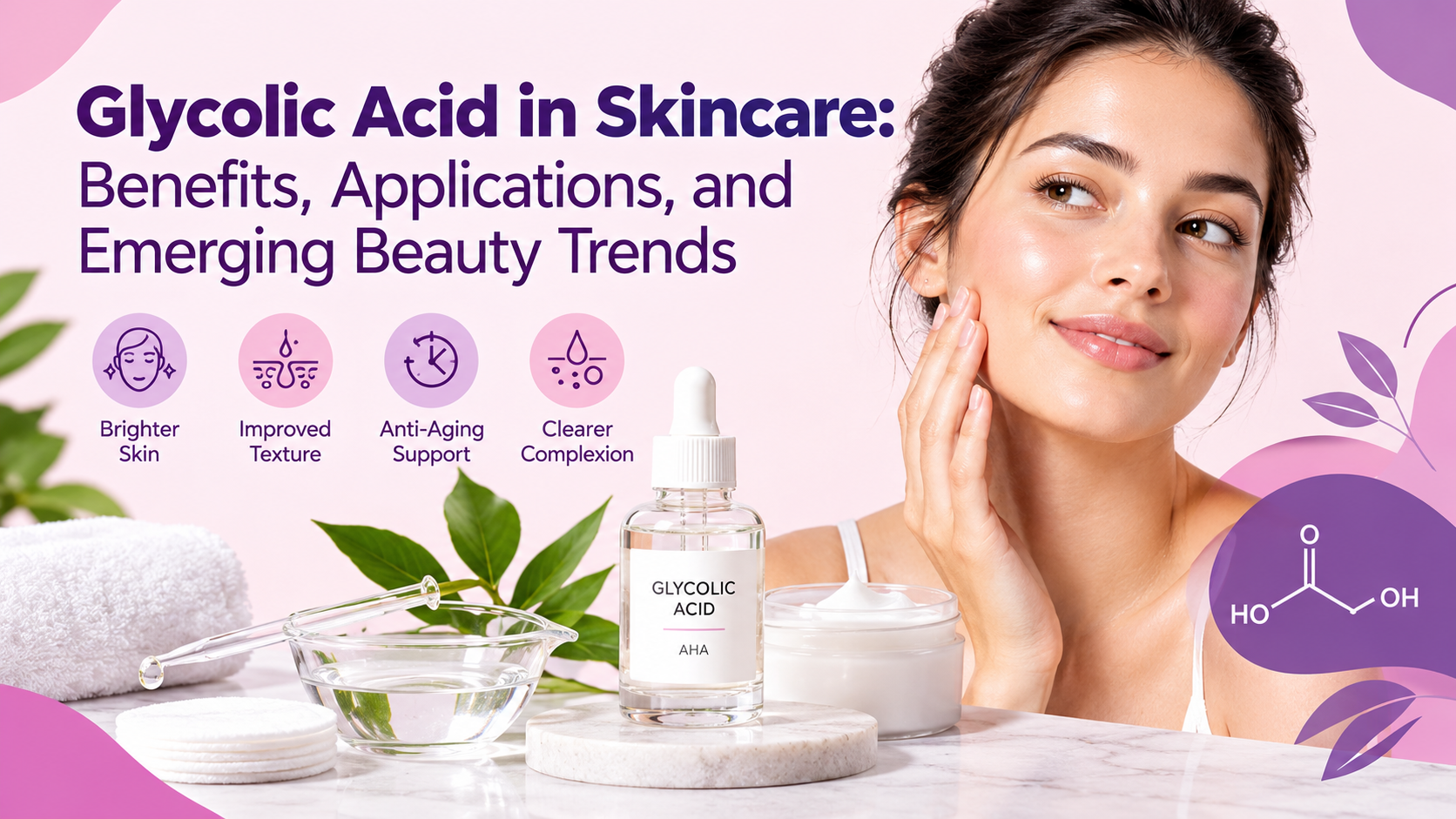
With the increased consumer demand for exfoliation, skin lightening, texture improvement, and anti-ageing, glycolic acid has emerged as one of the key active ingredients in today’s skincare products. As an AHA, it is popularly used in cleansers, toners, serums, moisturisers, chemical peelings, and body products. The versatility of the compound has also helped it gain ground in new areas of application, including scalp care and multi-purpose beauty products. The market for glycolic acid is developing in accordance with the overall market trends in active ingredient skin care, home care, customisation, and skin barrier products.
What Is Glycolic Acid and How Does It Function?
Glycolic acid belongs to the alpha hydroxy acids category, dissolves in water and consists of two carbon atoms. The compound occurs in sugarcane but may also be synthetically produced for cosmetic purposes. Due to its small molecular size, glycolic acid affects processes occurring in the outer layer of the skin, such as the stratum corneum. Glycolic acid in skincare products is normally used at an optimal concentration and pH level to alter the processes taking place in the intercellular space of the surface skin layer.
Biochemically, the main function of glycolic acid is the disruption of ionic bonds in the corneodesmosomes, which are the proteins responsible for holding mature corneocytes. It allows for separation of the cells in the stratum corneum. The exfoliation caused by glycolic acid is mostly based on increased desquamation of superficial corneocytes and not the destruction of live epidermal cells.
Read: Healthy Lifestyle Tips for Looking Your Best Daily
Important Skincare Benefits of Glycolic Acid
Exfoliating and Rejuvenating Effect
One of the main properties of glycolic acid is that it contributes to the shedding of the excess cells accumulated in the upper layer of skin. Due to glycolic acid, it becomes possible to break the bonds between the corneocytes, which results in shedding of the upper skin cells and ensures smoothness of the skin. When used properly, glycolic acid contributes to the natural process of rejuvenation of the skin and its protection from excess cell accumulation.
Smoother Skin
Yet another role of glycolic acid is associated with skin texture improvement. As a result of exfoliating the upper layer of skin, glycolic acid similarly assists in eliminating small problems with the skin texture. It helps to make skin smoother with regular, proper use. As a result of its capability of making the skin texture smoother and finer, glycolic acid has been included in most of the skin care products for those whose skin is uneven and not smooth.
More Radiant Skin
The presence of dead cells on the skin and uneven skin pigmentation may cause dull skin. The acid causes exfoliation of the outer skin layer to reveal the radiant skin underneath. The result is a more even complexion. The extent of improvement will, however, depend on the state of the skin, the formulation of the product, and consistency in the application of the cream.
Decrease in the Appearance of Dark Patches
Glycolic acid may be used to decrease the appearance of certain dark patches, including those resulting from acne. It assists in the elimination of the pigment-producing cells from the epidermis layer of the skin. This effect is more visible on superficial pigmentation than on deep pigmentation. It is also crucial to protect the skin from ultraviolet light, which can worsen the condition of dark spots and cause further skin pigmentation.
Less Obvious Appearance of Fine Lines
There might be an effect on improving fine line appearance, which has photoaging roots due to the presence of glycolic acid. Along with the exfoliation effect, there is the effect on the thickness of the epidermis and the collagen production processes in the dermis due to the proper formulation of glycolic acid. Glycolic acid is not a substitute for the full sunscreen application or any other skin-ageing therapy.
Thus, glycolic acid provides a few supplementary skincare effects, but the effects differ from one person to another.
Uses of Glycolic Acid in the Different Classes of Beauty Products
The uses of glycolic acid are many due to its versatile nature and its ability to be formulated in products that are specifically suited to the target application area of the product. Its uses have been diversified from face exfoliation applications to include other body care and special hair care formulations.
- Skin Face Cleansers: Glycolic acid face cleansers help to clean the skin surface due to the exfoliating properties. They don’t stay on the skin for a long period of time but they are washed away. The effectiveness of the toners and cleansing products used for skin exfoliation is determined by the concentration of those products, pH value and duration of the effect on the skin.
- Toners and Exfoliators: The products based on glycolic acid influence the skin during its cleansing process. A range of these products is available, differing by their concentration levels.
- Serums and Treatments: Glycolic acid serums act on specific skin problems and pigmentation issues. Such a type of products may include those which have glycolic acid combined with moisturising and other components to enhance their effectiveness. The reason why these products are so popular is due to the high demand for special treatments.
- Creams and Moisturisers: Just like the gels, creams and lotions also have GA and exfoliate and moisturise. Such products find application in facial and body treatments, especially for rough skin. While moisturisers ensure hydration of the skin, they do not prevent any possible irritation caused by glycolic acid.
- Chemical Peels: A chemical peel stands for a more intense treatment using glycolic acid. Professional chemical peels have higher concentrations of glycolic acid and should be applied by professionals, while the consumer chemical peels allow for more controlled application of glycolic acid.
- Body Care Products: Ingredients such as glycolic acid is used in body lotions and exfoliants for treating skin issues including roughness of the skin, uneven skin tone, and certain forms of body hyperpigmentation. Application is done based on the different areas of the body as directed.
- Scalp and Hair Care Products: The use of glycolic acid in scalp exfoliators and pre-shampoo treatments is gaining popularity in recent times. These products help remove the buildup of dead skin cells and other product residues from the scalp.
New Developments in Beauty Products Containing Glycolic Acid
- DIY Skin Care Inspired by Salons
It has become popular for customers to seek skincare products and techniques that mimic the ones used in salons. The current trend will lead to the production of distinctively varied lines of products ranging from beginner exfoliating sets, cleansers prior to treatment, and complete skincare systems. Additionally, the brands can now emphasise proper use of these products as well as instructions on how to select the right products without always visiting the salons.
- Multi-Purpose Beauty Products
The multi-purpose nature of the products is driving innovation in product design as customers try to simplify their daily routine by using several products simultaneously. Products featuring glycolic acid as an active ingredient are now being developed as multi-purpose products containing additional ingredients, such as moisturisers, soothing agents, and antioxidants.
- Active Body Care Expands Its Range
With the rise of holistic skin care approaches, the concept of ingredient-based beauty routines is moving beyond face care products. Body care is becoming a crucial area of active ingredients due to consumers’ preference for specialised lotions, treatments and high-end body care items. The trend of glycolic acid correlates with the need for more sophisticated collections of body care products than moisturisers and body washes.
- Personalised Skincare and Digitisation
Skin tests performed digitally, virtual consultations, and custom recommendations have a certain effect on how consumers discover active ingredients. The beauty industry is experimenting with technologies that match products with consumers’ needs, preferences and specific skin. In regard to glycolic acid products, personalised guidance will help consumers choose appropriate products without overdoing their care routine.
- Barrier-Conscious Beauty
An understanding of the skin barrier is starting to become a significant factor for active skin care. There is an increased interest among consumers in issues such as irritation, dryness, and the compatibility of the active agents involved in the exfoliation process with the rest of the skincare regimen.
- Ingredient Awareness and Science-Based Marketing Claims
There is a growing interest among consumers in the analysis of ingredient listings, their concentrations and the scientific validity of claims about skincare benefits. This allows brands to differentiate their products through their effective communications and scientifically based claims about performance.
Future of Glycolic Acid in Skincare
Glycolic acid still retains its place in the world of skincare by virtue of its applicability in various facial products, body care products, and new uses in the beauty industry. Increasing consumer preferences for active ingredients, customisation, and scientifically-based product selection have led to innovations in the field.
The glycolic acid market is predicted to move forward with further development of formulation techniques, barrier-friendly products, and multi-purpose beauty products. According to Pristine Market Insights, in the future, the glycolic acid market will become more and more dependent on the combination of ingredient efficiency and skin tolerability, effective product communication, and customer preferences.